Adam Tauman Kalai is an American computer scientist who specializes in artificial intelligence and works at OpenAI. == Education and career == Kalai graduated from Harvard University in 1996 with a BA in computer science and received a MA and PhD, both in computer science, from Carnegie Mellon University in 1999 and 2001, respectively. His doctoral advisor was Avrim Blum. After graduation, Kalai did his postdoctoral research at Massachusetts Institute of Technology under Santosh Vempala until 2003. Kalai became a faculty member at the Toyota Technological Institute at Chicago from 2003 to 2006, followed by a stint as an assistant professor at Georgia Institute of Technology from 2007 to 2008. He joined Microsoft Research in 2008 and subsequently moved to OpenAI in 2023. == Contributions == Kalai is known for his algorithm for generating random factored numbers (see Bach's algorithm), for co-inventing the cooperative-competitive value (coco value), for efficiently learning learning mixtures of Gaussians, for the Blum-Kalai-Wasserman algorithm for learning parity with noise, and for the intractability of the folk theorem in game theory. More recently, Kalai is known for identifying and reducing gender bias in word embeddings, which are a representation of words commonly used in AI systems. In 2026, he coauthored a Nature paper on hallucinations in large language models. == Personal life == Kalai is the son of game theorist Ehud Kalai and is married to cryptographer Yael Tauman Kalai.
Crucible (software)
Crucible is a collaborative code review application by Australian software company Atlassian. Like other Atlassian products, Crucible is a Web-based application primarily aimed at enterprise, and certain features that enable peer review of a codebase may be considered enterprise social software. Crucible is particularly tailored to remote workers, and facilitates asynchronous review and commenting on code. Crucible also integrates with popular source control tools, such as Git and Subversion. Crucible is not open source, but customers are allowed to view and modify the code for their own use.
Exposure Notification
The (Google/Apple) Exposure Notification System (GAEN) is a framework and protocol specification developed by Apple Inc. and Google to facilitate digital contact tracing during the COVID-19 pandemic. When used by health authorities, it augments more traditional contact tracing techniques by automatically logging close approaches among notification system users using Android or iOS smartphones. Exposure Notification is a decentralized reporting protocol built on a combination of Bluetooth Low Energy technology and privacy-preserving cryptography. It is an opt-in feature within COVID-19 apps developed and published by authorized health authorities. Unveiled on April 10, 2020, it was made available on iOS on May 20, 2020, as part of the iOS 13.5 update and on December 14, 2020, as part of the iOS 12.5 update for older iPhones. On Android, it was added to devices via a Google Play Services update, supporting all versions since Android Marshmallow. The Apple/Google protocol is similar to the Decentralized Privacy-Preserving Proximity Tracing (DP-3T) protocol created by the European DP-3T consortium and the Temporary Contact Number (TCN) protocol by Covid Watch, but is implemented at the operating system level, which allows for more efficient operation as a background process. Since May 2020, a variant of the DP-3T protocol is supported by the Exposure Notification Interface. Other protocols are constrained in operation because they are not privileged over normal apps. This leads to issues, particularly on iOS devices where digital contact tracing apps running in the background experience significantly degraded performance. The joint approach is also designed to maintain interoperability between Android and iOS devices, which constitute nearly all of the market. The ACLU stated the approach "appears to mitigate the worst privacy and centralization risks, but there is still room for improvement". In late April, Google and Apple shifted the emphasis of the naming of the system, describing it as an "exposure notification service", rather than "contact tracing" system. == Technical specification == Digital contact tracing protocols typically have two major responsibilities: encounter logging and infection reporting. Exposure Notification only involves encounter logging which is a decentralized architecture. The majority of infection reporting is centralized in individual app implementations. To handle encounter logging, the system uses Bluetooth Low Energy to send tracking messages to nearby devices running the protocol to discover encounters with other people. The tracking messages contain unique identifiers that are encrypted with a secret daily key held by the sending device. These identifiers change every 15–20 minutes as well as Bluetooth MAC address in order to prevent tracking of clients by malicious third parties through observing static identifiers over time. The sender's daily encryption keys are generated using a random number generator. Devices record received messages, retaining them locally for 14 days. If a user tests positive for infection, the last 14 days of their daily encryption keys can be uploaded to a central server, where it is then broadcast to all devices on the network. The method through which daily encryption keys are transmitted to the central server and broadcast is defined by individual app developers. The Google-developed reference implementation calls for a health official to request a one-time verification code (VC) from a verification server, which the user enters into the encounter logging app. This causes the app to obtain a cryptographically signed certificate, which is used to authorize the submission of keys to the central reporting server. The received keys are then provided to the protocol, where each client individually searches for matches in their local encounter history. If a match meeting certain risk parameters is found, the app notifies the user of potential exposure to the infection. Google and Apple intend to use the received signal strength (RSSI) of the beacon messages as a source to infer proximity. RSSI and other signal metadata will also be encrypted to resist deanonymization attacks. === Version 1.0 === To generate encounter identifiers, first a persistent 32-byte private Tracing Key ( t k {\displaystyle tk} ) is generated by a client. From this a 16 byte Daily Tracing Key is derived using the algorithm d t k i = H K D F ( t k , N U L L , 'CT-DTK' | | D i , 16 ) {\displaystyle dtk_{i}=HKDF(tk,NULL,{\text{'CT-DTK'}}||D_{i},16)} , where H K D F ( Key, Salt, Data, OutputLength ) {\displaystyle HKDF({\text{Key, Salt, Data, OutputLength}})} is a HKDF function using SHA-256, and D i {\displaystyle D_{i}} is the day number for the 24-hour window the broadcast is in starting from Unix Epoch Time. These generated keys are later sent to the central reporting server should a user become infected. From the daily tracing key a 16-byte temporary Rolling Proximity Identifier is generated every 10 minutes with the algorithm R P I i , j = Truncate ( H M A C ( d t k i , 'CT-RPI' | | T I N j ) , 16 ) {\displaystyle RPI_{i,j}={\text{Truncate}}(HMAC(dtk_{i},{\text{'CT-RPI'}}||TIN_{j}),16)} , where H M A C ( Key, Data ) {\displaystyle HMAC({\text{Key, Data}})} is a HMAC function using SHA-256, and T I N j {\displaystyle TIN_{j}} is the time interval number, representing a unique index for every 10 minute period in a 24-hour day. The Truncate function returns the first 16 bytes of the HMAC value. When two clients come within proximity of each other they exchange and locally store the current R P I i , j {\displaystyle RPI_{i,j}} as the encounter identifier. Once a registered health authority has confirmed the infection of a user, the user's Daily Tracing Key for the past 14 days is uploaded to the central reporting server. Clients then download this report and individually recalculate every Rolling Proximity Identifier used in the report period, matching it against the user's local encounter log. If a matching entry is found, then contact has been established and the app presents a notification to the user warning them of potential infection. === Version 1.1 === Unlike version 1.0 of the protocol, version 1.1 does not use a persistent tracing key, rather every day a new random 16-byte Temporary Exposure Key ( t e k i {\displaystyle tek_{i}} ) is generated. This is analogous to the daily tracing key from version 1.0. Here i {\displaystyle i} denotes the time is discretized in 10 minute intervals starting from Unix Epoch Time. From this two 128-bit keys are calculated, the Rolling Proximity Identifier Key ( R P I K i {\displaystyle RPIK_{i}} ) and the Associated Encrypted Metadata Key ( A E M K i {\displaystyle AEMK_{i}} ). R P I K i {\displaystyle RPIK_{i}} is calculated with the algorithm R P I K i = H K D F ( t e k i , N U L L , 'EN-RPIK' , 16 ) {\displaystyle RPIK_{i}=HKDF(tek_{i},NULL,{\text{'EN-RPIK'}},16)} , and A E M K i {\displaystyle AEMK_{i}} using the algorithm A E M K i = H K D F ( t e k i , N U L L , 'EN-AEMK' , 16 ) {\displaystyle AEMK_{i}=HKDF(tek_{i},NULL,{\text{'EN-AEMK'}},16)} . From these values a temporary Rolling Proximity Identifier ( R P I i , j {\displaystyle RPI_{i,j}} ) is generated every time the BLE MAC address changes, roughly every 15–20 minutes. The following algorithm is used: R P I i , j = A E S 128 ( R P I K i , 'EN-RPI' | | 0 x 000000000000 | | E N I N j ) {\displaystyle RPI_{i,j}=AES128(RPIK_{i},{\text{'EN-RPI'}}||{\mathtt {0x000000000000}}||ENIN_{j})} , where A E S 128 ( Key, Data ) {\displaystyle AES128({\text{Key, Data}})} is an AES cryptography function with a 128-bit key, the data is one 16-byte block, j {\displaystyle j} denotes the Unix Epoch Time at the moment the roll occurs, and E N I N j {\displaystyle ENIN_{j}} is the corresponding 10-minute interval number. Next, additional Associated Encrypted Metadata is encrypted. What the metadata represents is not specified, likely to allow the later expansion of the protocol. The following algorithm is used: Associated Encrypted Metadata i , j = A E S 128 _ C T R ( A E M K i , R P I i , j , Metadata ) {\displaystyle {\text{Associated Encrypted Metadata}}_{i,j}=AES128\_CTR(AEMK_{i},RPI_{i,j},{\text{Metadata}})} , where A E S 128 _ C T R ( Key, IV, Data ) {\displaystyle AES128\_CTR({\text{Key, IV, Data}})} denotes AES encryption with a 128-bit key in CTR mode. The Rolling Proximity Identifier and the Associated Encrypted Metadata are then combined and broadcast using BLE. Clients exchange and log these payloads. Once a registered health authority has confirmed the infection of a user, the user's Temporary Exposure Keys t e k i {\displaystyle tek_{i}} and their respective interval numbers i {\displaystyle i} for the past 14 days are uploaded to the central reporting server. Clients then download this report and individually recalculate every Rolling Proximity Identifier starting from interval number i {\displaystyle i} ,
Procreate (software)
Procreate is a raster graphics editor app for digital painting developed and published by the Australian company Savage Interactive for iOS and iPadOS. It was launched on the App Store in 2011. == Versions == === Procreate === Procreate for iPad was first released in 2011 by the Tasmanian software company Savage Interactive. In June 2013, Savage launched Procreate 2 in conjunction with iOS 7, adding new features such as higher resolution capabilities and more brush options. In 2016, Procreate became one of the top ten best-selling iPad apps on the App Store. In 2018, Procreate became the overall best selling iPad app. With iOS 26, Procreate adapted Liquid Glass into its software. As of March 2026, the most recent version of Procreate for the iPad is 5.4.9. === Procreate Pocket === Procreate Pocket was released to the App Store in December 2014. In 2018, Savage launched Procreate Pocket 2.0 to the App Store. In December 2018, Procreate Pocket received Apple's "App of the Year" award. As of September 2025, the most recent version of Procreate Pocket (for the iPhone) is 4.0.15. === Procreate Dreams === Procreate Dreams, their more recent app focused on 2D animation, was released on the App Store on November 22, 2023. While the application is commended for its intuitive interface and accessibility, some reviewers have noted that it may lack some key animations features, such as reference layers. In June 2024, Procreate Dreams received the 2024 Apple Design Award for Innovation. In December 2025, Savage Interactive released Procreate Dreams 2, a long awaited update and redesign to Procreate Dreams. == Features == The current versions of Procreate use Valkyrie, a proprietary graphics engine to allow customisable brush options and importing brushes from Adobe Photoshop. Procreate offers known features like layers, masks, and blending mode. Its biggest standout compared to other professional drawing software is its simple UI and comparatively easy learning curve. The app also allows for animation. Savage expanded upon Procreate's animation features with a companion app dedicated to 2D animation called Procreate Dreams, released in November 2023. On August 2024, Procreate announced that it would not be incorporating generative artificial intelligence into its software. Savage offers a free internet forum called Procreate Discussions in which users can ask for help, suggest ideas, and share user-generated content on the marketplace or the resources board. == Notable users == Concept artist Doug Chiang creates robot, vehicle, and creature designs for Star Wars in Procreate. Professional artists have also used Procreate to create the posters for Stranger Things, Logan, and Blade Runner 2049, as well as several covers for The New Yorker. It has also been professionally adopted at Marvel Comics, DC Comics, Disney Animation, and Pixar.
Desktop Window Manager
Desktop Window Manager (DWM, previously Desktop Compositing Engine or DCE in builds of pre-reset Windows Longhorn) is the compositing window manager in Microsoft Windows since Windows Vista that enables the use of hardware acceleration to render the graphical user interface of Windows. It was originally created to enable portions of the new "Windows Aero" user experience, which allowed for effects such as transparency, 3D window switching and more. It is also included with Windows Server 2008, but requires the "Desktop Experience" feature and compatible graphics drivers to be installed. == Architecture == The Desktop Window Manager is a compositing window manager, meaning that each program has a buffer that it writes data to; DWM then composites each program's buffer into a final image. By comparison, the stacking window manager in Windows XP and earlier (and also Windows Vista and Windows 7 with Windows Aero disabled) comprises a single display buffer to which all programs write. DWM works in different ways depending on the operating system (Windows 7 or Windows Vista) and on the version of the graphics drivers it uses (WDDM 1.0 or 1.1). Under Windows 7 and with WDDM 1.1 drivers, DWM only writes the program's buffer to the video RAM, even if it is a graphics device interface (GDI) program. This is because Windows 7 supports (limited) hardware acceleration for GDI and in doing so does not need to keep a copy of the buffer in system RAM so that the CPU can write to it. Because the compositor has access to the graphics of all applications, it easily allows visual effects that string together visuals from multiple applications, such as transparency. DWM uses DirectX to perform the function of compositing and rendering in the GPU, freeing the CPU of the task of managing the rendering from the off-screen buffers to the display. However, it does not affect applications painting to the off-screen buffers – depending on the technologies used for that, this might still be CPU-bound. DWM-agnostic rendering techniques like GDI are redirected to the buffers by rendering the user interface (UI) as bitmaps. DWM-aware rendering technologies like WPF directly make the internal data structures available in a DWM-compatible format. The window contents in the buffers are then converted to DirectX textures. The desktop itself is a full-screen Direct3D surface, with windows being represented as a mesh consisting of two adjacent (and mutually inverted) triangles, which are transformed to represent a 2D rectangle. The texture, representing the UI chrome, is then mapped onto these rectangles. Window transitions are implemented as transformations of the meshes, using shader programs. With Windows Vista, the transitions are limited to the set of built-in shaders that implement the transformations. Greg Schechter, a developer at Microsoft has suggested that this might be opened up for developers and users to plug in their own effects in a future release. DWM only maps the primary desktop object as a 3D surface; other desktop objects, including virtual desktops as well as the secure desktop used by User Account Control are not. Because all applications render to an off-screen buffer, they can be read off the buffer embedded in other applications as well. Since the off-screen buffer is constantly updated by the application, the embedded rendering will be a dynamic representation of the application window and not a static rendering. This is how the live thumbnail previews and Windows Flip work in Windows Vista and Windows 7. DWM exposes a public API that allows applications to access these thumbnail representations. The size of the thumbnail is not fixed; applications can request the thumbnails at any size - smaller than the original window, at the same size or even larger - and DWM will scale them properly before returning. Aero Flip does not use the public thumbnail APIs as they do not allow for directly accessing the Direct3D textures. Instead, Aero Flip is implemented directly in the DWM engine. The Desktop Window Manager uses Media Integration Layer (MIL), the unmanaged compositor which it shares with Windows Presentation Foundation, to represent the windows as composition nodes in a composition tree. The composition tree represents the desktop and all the windows hosted in it, which are then rendered by MIL from the back of the scene to the front. Since all the windows contribute to the final image, the color of a resultant pixel can be decided by more than one window. This is used to implement effects such as per-pixel transparency. DWM allows custom shaders to be invoked to control how pixels from multiple applications are used to create the displayed pixel. The DWM includes built-in Pixel Shader 2.0 programs which compute the color of a pixel in a window by averaging the color of the pixel as determined by the window behind it and its neighboring pixels. These shaders are used by DWM to achieve the blur effect in the window borders of windows managed by DWM, and optionally for the areas where it is requested by the application. Since MIL provides a retained mode graphics system by caching the composition trees, the job of repainting and refreshing the screen when windows are moved is handled by DWM and MIL, freeing the application of the responsibility. The background data is already in the composition tree and the off-screen buffers and is directly used to render the background. In pre-Vista Windows OSs, background applications had to be requested to re-render themselves by sending them the WM_PAINT message. DWM uses double-buffered graphics to prevent flickering and tearing when moving windows. The compositing engine uses optimizations such as culling to improve performance, as well as not redrawing areas that have not changed. Because the compositor is multi-monitor aware, DWM natively supports this too. During full-screen applications, such as games, DWM does not perform window compositing and therefore performance will not appreciably decrease. On Windows 8 and Windows Server 2012, DWM is used at all times and cannot be disabled, due to the new "start screen experience" implemented. Since the DWM process is usually required to run at all times on Windows 8, users experiencing an issue with the process are seeing memory usage decrease after a system reboot. This is often the first step in a long list of troubleshooting tasks that can help. It is possible to prevent DWM from restarting temporarily in Windows 8, which causes the desktop to turn black, the taskbar grey, and break the start screen/modern apps, but desktop apps will continue to function and appear just like Windows 7 and Vista's Basic theme, based on the single-buffer renderer used by XP. They also use Windows 8's centered title bar, visible within Windows PreInstallation Environment. Starting up Windows without DWM will not work because the default lock screen requires DWM unlike the fallback lockscreen that appears as a command line interface program when Windows.UI.Logon.dll isn't present on Windows versions such as 1507 and later, so it can only be done on the fly, and does not have any practical purposes. Starting with Windows 10, disabling DWM in such a way will cause the entire compositing engine to break, even traditional desktop apps, due to Universal App implementations in the taskbar and new start menu. Windows can still be partially usable without the presence of DWM but requires Sihost.exe to not be present due to it relying on DWM. Most of the applications in Windows 11 require DWM to render UI elements and transparency, Windows 11's new task manager requires dwm to render menus unlike the fallback -d version. Unlike its predecessors, Windows 8 supports basic display adapters through Windows Advanced Rasterization Platform (WARP), which uses software rendering and the CPU to render the interface rather than the graphics card. This allows DWM to function without compatible drivers, but not at the same level of performance as with a normal graphics card. DWM on Windows 8 also adds support for stereoscopic 3D. == Redirection == For rendering techniques that are not DWM-aware, output must be redirected to the DWM buffers. With Windows, either GDI or DirectX can be used for rendering. To make these two work with DWM, redirection techniques for both are provided. With GDI, which is the most used UI rendering technique in Microsoft Windows, each application window is notified when it or a part of it comes in view and it is the job of the application to render itself. Without DWM, the rendering rasterizes the UI in a buffer in video memory, from where it is rendered to the screen. Under DWM, GDI calls are redirected to use the Canonical Display Driver (cdd.dll), a software renderer. A buffer equal to the size of the window is allocated in system memory and CDD.DLL outputs to this buffer rather than the video memory. Another buffer is allocated in the video memory to represent t
Necrobotics
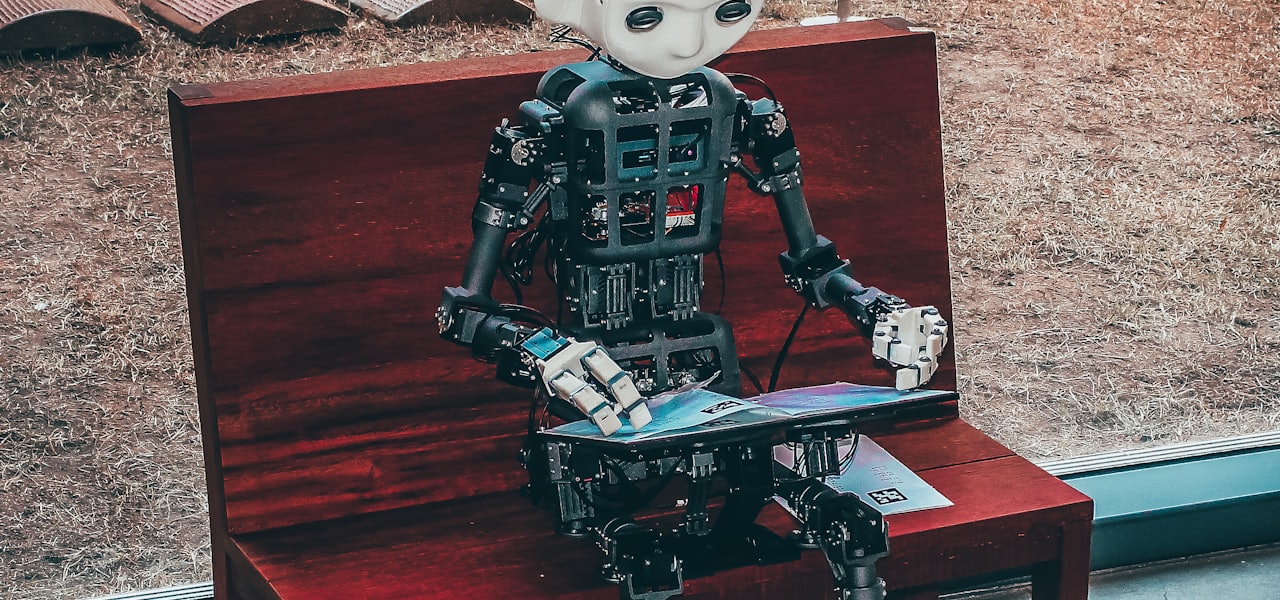
Necrobotics is the practice of using biotic materials (or dead organisms) as robotic components. Necrobotics can serve as an alternative to mechanical components that are difficult to manufacture by using biological components designed by natural selection in order to exploit the highly developed selective design implemented in biological lifeforms via the process of evolution. In July 2022, researchers in the Preston Innovation Lab at Rice University in Houston, Texas published a paper in Advanced Science introducing the concept and demonstrating its capability by repurposing dead spiders as robotic grippers and applying pressurized air to activate their gripping arms. In April 2025 researchers at Shinshu University created a “bio-hybrid drone” using silk-worm moth antennae to detect the source of a smell. In November 2025 researchers at McGill University demonstrated the use of a mosquito proboscis as a fine nozzle in experimental 3D printing. Necrobotics utilizes the spider's organic hydraulic system and their compact legs to create an efficient and simple gripper system. The necrobotic spider gripper is capable of lifting small and light objects, thereby serving as an alternative to complex and costly small mechanical grippers. == Background == The main appeal of the spider's body in necrobotics is its compact leg mechanism and use of hydraulic pressure. The spider's anatomy utilizes a simple hydraulic (fluid) pressure system. Spider legs have flexor muscles that naturally constrict their legs when relaxed. A force is required to straighten and extend their legs, which spiders accomplish by pumping hemolymph fluid (blood) through their joints as a means of hydraulic pressure. It takes no external power to curl their legs due to their flexor muscles' natural curled state. In July 2022, researchers in the Preston Innovation Lab at Rice University published a paper detailing their experiments with the gripper. Although dead spiders no longer produce hemolymph, Te Faye Yap (lead author and mechanical engineering graduate) found that pumping air through a needle into the spider's cephalothorax (main body) accomplishes the same results as hemolymph. The original hydraulic (fluid) system is essentially converted into a pneumatic (air) system. == Fabrication == Obtain a spider Euthanize the spider using a cold temperature of around -4°C for 5-7 days Insert a 25 gauge hypodermic needle into the spider's cephalothorax (main body) Apply glue around the needle to form a seal and allow it to dry Connect a syringe or pump to the needle Extend the spider's legs by pumping air in == Testing and Data == === Internal Force Versus Gripping Force === The typical pressure in a resting spider's legs ranges from 4 kPa to 6.1 kPa. Researchers extended the legs by increasing the spider's internal pressure to 5.5 kPa. Pumping air into the body increases the internal pressure, causing the legs to expand. Pumping air out of the body decreases internal pressure, causing the legs to contract due to their flexor leg muscles. When the internal pressure decreases to 0 kPa, the gripper would be fully closed, allowing for the gripper to grasp objects. This action demonstrates that as internal pressure decreases, the gripping force increases. Inversely, when internal pressure increases, the gripping force decreases. By gripping individual weighted acetate beads, it is found that the necrobotic gripper achieves a maximum gripping force of 0.35 milinewtons. === Spider Weight Versus Gripping Force === To estimate the gripping forces of smaller and larger spiders, researchers created a plot to predict the gripping force relative to the size of the spider. The wolf spider's body weight is relatively equal to the gripping force of its legs. The mass of the gripper is 33.5 mg and can lift 1.3 times its body weight (43.6 mg or 0.35 mN). However, with larger spiders, the gripping force relative to body weight decreases. For example, a 200-gram goliath birdeater is predicted to lift 10% of its weight (20 grams or 196 mN). Though there is an inverse relationship between spider mass and gripping force, larger spiders exert greater gripping forces than smaller spiders. === Gripper Lifespan === The necrobotic gripper's functionality is entirely reliant on the structural integrity of the spider. If the spider were to break down easily and frequently, the gripper would not be practical. Using cyclic testing, a series of repeated actions, it is found that the necrobotic gripper can actuate 700 to 1000 times. After 1000 cycles, cracks begin forming on the membrane of the leg joints due to dehydration. Weakened and decomposing joints lead to frequent breakage and replacement, thereby serving as an obstacle in applying necrobotics to real-world scenarios. One theorized fix to this issue is applying beeswax or a lubricant to the joints. Researchers found that over 10 days, the mass of an uncoated spider decreased 17 times more than the mass of a spider coated with beeswax. Lubricating joints combats dehydration and slows the loss of organic material. == Constraints == With the usage of organic material, there is a higher chance of the component decomposing and breaking down as opposed to traditional mechanical systems. There may be additional work and management required to replace these grippers if they fail. Additionally, organic inconsistencies with the spiders will yield inaccurate results. Not all wolf spiders develop the same, so gripping force and leg contraction can vary between grippers. There are moral implications behind euthanizing spiders for robotics. The ethical boundaries that necrobotics push in the pursuit of biohybrid systems raise concerns, as opponents say it may lead to the hybridization of mammals and is intrusive to nature. Proponents respond that repurposing dead animals has been human practice for millennia and that necrobotics should be pursued to advance science.
BiP (software)
BiP is a freeware instant messaging application developed by Lifecell Ventures Cooperatief U.A., a subsidiary of Turkcell incorporated in the Netherlands. It allows users to send text messages, voice messages and video calling, and it can be downloaded from the App Store, Google Play, and Huawei AppGallery. BiP has over 53 million users worldwide, and was first released in 2013. == Functions == BiP is a secure, and free communication platform. BiP allows making video and audio calls, allows sharing images, videos and location. BiP includes instant translations to 106 languages and exchange rates. President Erdoğan's Communications Office opposed WhatsApp's enforcement of its updated privacy policy and announced that Erdoğan left WhatsApp and opened an account in Telegram and BiP. The Turkish Ministry of National Defense has announced that it will move information groups to BiP for the same reason. == Others == Banglalink announced a BiP messenger partnership in Bangladesh The Communications Office of President Erdoğan opposed WhatsApp's enforcement of its updated privacy policy and announced that Erdoğan left WhatsApp and opened an account in Telegram and BiP. The Turkish Ministry of National Defense has announced that it will move information groups to BiP for the same reason. The CEO of BiP is Burak Akinci. The number of downloads of the app is 80 million globally.